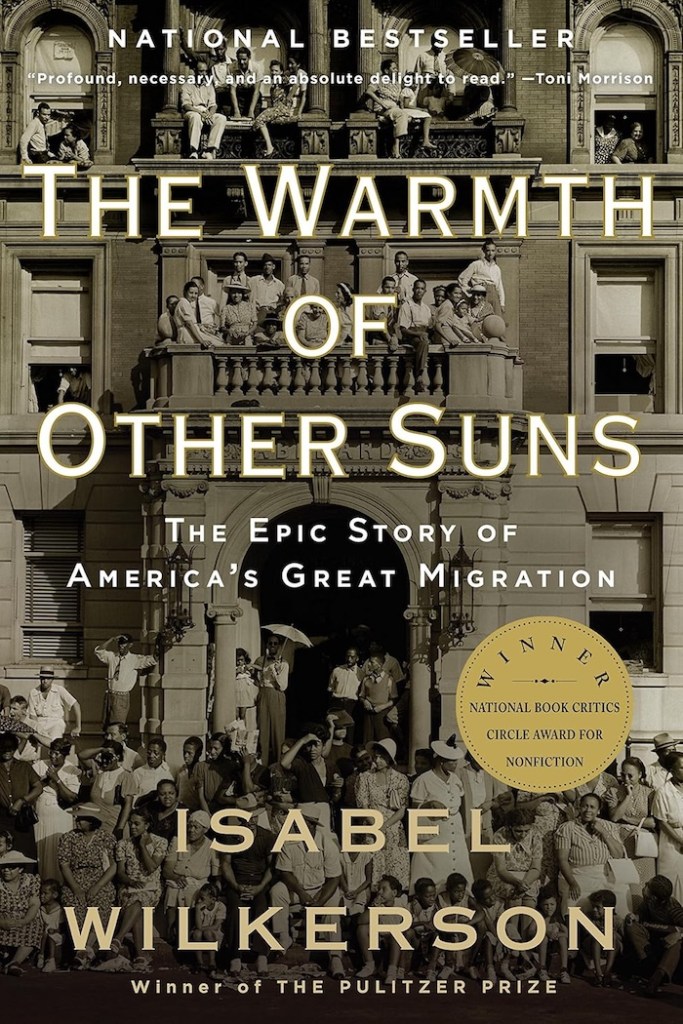
The Warmth of Other Suns by Isabel Wilkerson covers a not-often talked-about subject that helped shaped the United States into what it is today: The Great Migration of the colored people from the Southern slavery states to the North and West. I had great interest in this topic, not because I am a colored person, but more so because I wanted to learn more about their plight and also because my parents also came into the United States as immigrants from another country. I thought it really odd how the migration talked about here considered the people traveling from the South to the North were considered “immigrants” at the time. Weren’t they also American citizens? Weren’t the southern states still a part of the United States? Well, it turns out that word really wasn’t the right term to use, but during contemporary times, things were a bit different. What a story this turned out to be.
Maybe you had to live through the worst of times to recognize the best of times when they came to you. Maybe that was just the way it was with people.
Author on George Starling
The author picked three special individuals out of thousands she has interviewed to cover the majority of this book. They were great choices because all three were so different. Each had their reasons for leaving the South for a better life in the North and West, and each had different endings, either sweet or bittersweet. It’s amazing to be reminded yet again that although the Emancipation Proclamation was signed in 1863, it would take multiple decades later—in fact, almost another century or so—before things actually got better and that was before all the countless violence and death that preceded it. The author tries to give us a detailed look into just what it took for individuals at the time to pack their bags, leave everything and everyone they knew behind, and head for a state up north or west that saw blacks as more equals with the whites. However, was it really better or just a different type of hell?
“I wasn’t invited to shake hands with Hitler. But I wasn’t invited to the White House to shake hands with the President either….Now, what’s the difference?”
Jesse Owens – Olympics track & field gold medalist
It’s no surprise that reading about slavery is like stepping into a dystopian world every time, because it is essentially is dystopian! The most haunting observation made is how, during those times, a colored person really had no escape, even after migrating. While they were considered free and equal, the horde of migrants flooding to specific states changed the way of life not just for the white population there but also for the northern-colored people as well. It’s haunting and chilling to learn that during those times of contention, a true white immigrant from another country flooding into those states could simply blend in by changing their names to sound more “Americanized”, a colored person had no such luxury simply because they couldn’t escape or hide their skin color.
He had to walk a thin line between being a man and acting a slave. Step too far on one side, and he couldn’t live with himself. Step too far on the other, and he might not live at all.
Author on George, Ida Mae’s husband
This book was a treasure to read. I did notice many repeated portions that could likely have been removed to shorten the length of the book. However, it does serve as an important reminder that many of the research and assumptions done and made during those times were proven incorrect afterward when more data was collected. It’s crazy to believe that these migrants had so much uncertainty simply by migrating to a different state within the same country during those troubled times. It really must have felt like stepping into a New World for them.


 The Mindless Catalog
Leave a comment