Author Elizabeth Strout has written a contemporary literary fiction novel that hits very close to home for many, I’d dare assume. Here is a novel that forces us to confront a basic truth about ourselves that many likely fail to either realize or spend too little time thinking about. What does it really mean to understand one another? Even to those closest to us, whom we believe know us best, everyone has their own secrets and private thoughts that ultimately make a person unknowable. Scarily enough, it may even prompt us to ask if we know ourselves as much as we’d like to. I know this all sounds pretentious and whatnot, but The Things We Never Say really is one of those novels that makes one think about how we see the world compared to others and how what we go through can alter our views.
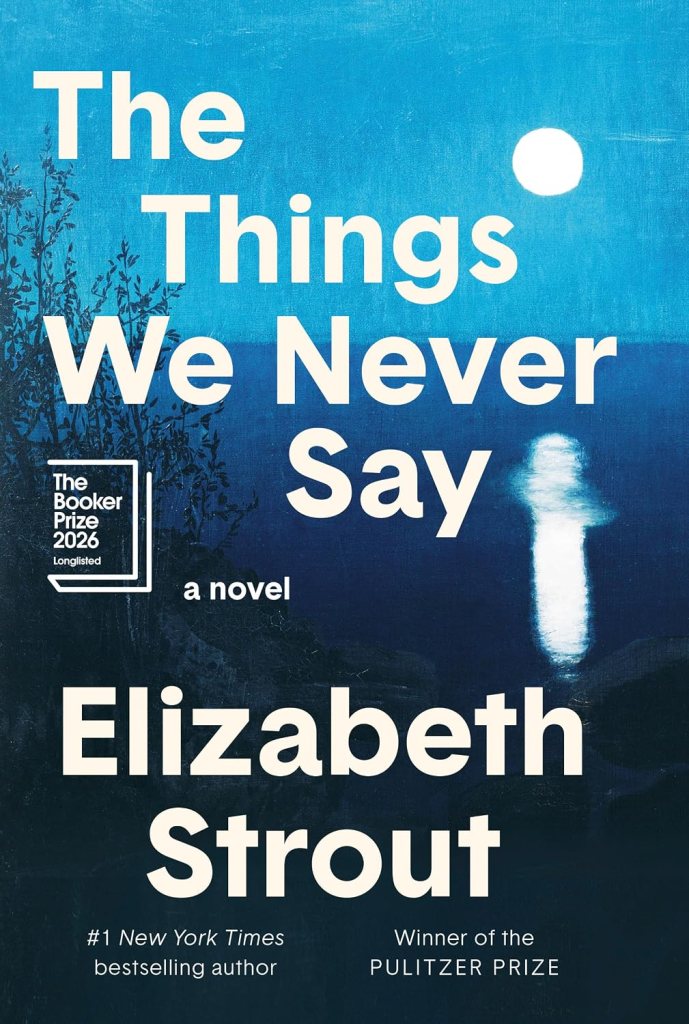
The novel starts off a bit weirdly when we are introduced to a middle-aged high school history teacher, Artie Dam. It doesn’t seem all that interesting at first but then the story shifts into a different gear once Artie starts to contemplate free will, realizing and asking why is it that people never say anything real anymore in conversations along with his precognition along with brush with death. Here is a nice man who we would learn later would make a difference to some of his student’s lives just going through life and often reflecting back on his childhood along with his present and routine life with work, friends and wife.
All of us live with a huge blind spot before our eyes, meaning that no matter what we think we know we can never fully understand how we appear to others.
Arte Dam
The story takes a slight turn once we learn about Arte’s anxiety regarding the current political atmosphere and situation in the United States. As a history teacher, he is completely afraid of where the country is heading. The author uses our present-day political divide as the basis for Arte’s fear in the book. It will be obvious that many readers will likely object to this and may even roll their eyes at the author for including it in the novel. I think it contributes a great deal to Arte’s later mental condition in life, and sadly, once again, I can only imagine how closely this political anxiety hits home for many thousands of other citizens in our current society.
It was a private thing, to be alive. He understood this now.
Arte Dam
The Things We Never Say is one of those novels that I usually have a harder time reviewing. There are certainly a lot of themes that it goes over, as well as the hidden meanings that go with the characters’ everyday life and actions. His story with his son Rob, after having learned of the big surprise, was one of those few warming moments we get to see Arte witness in his private life. But one takeaway I got is that for all the talking Arte does, it also felt that he himself was not immune to it. Sometimes it’s enough to enjoy a person’s company, even if we don’t get to learn everything about them. It goes without saying that people who can get easily depressed should think twice before reading this novel.





Leave a Reply