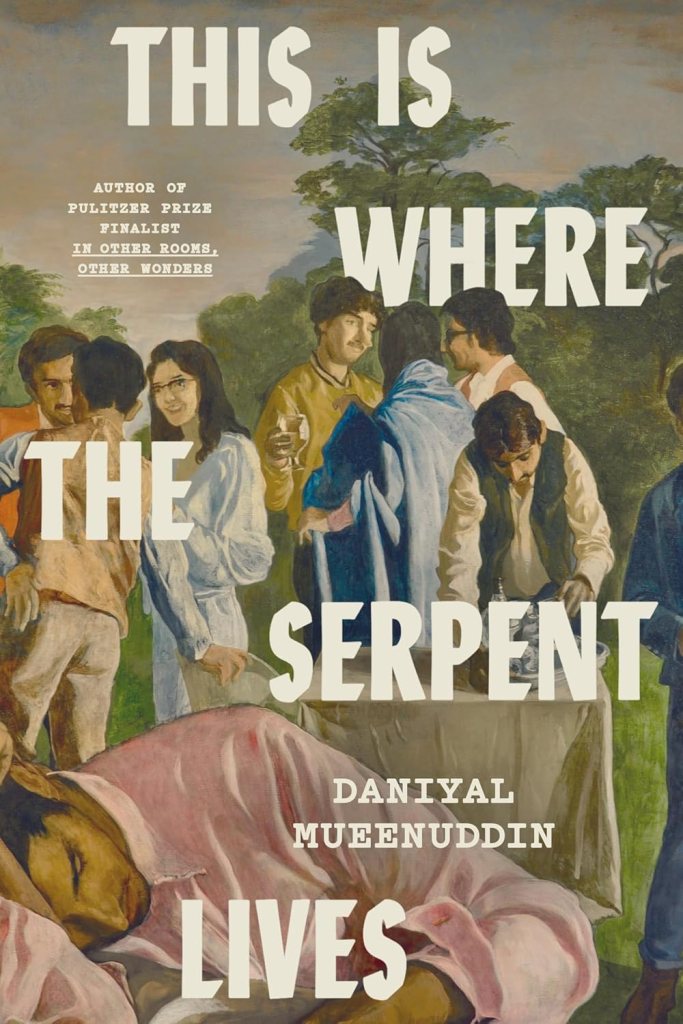
This literary novel is likely one of the first I have read regarding Pakistan’s caste system. It weaves a tale among four or five different people, all with different circumstances but ties to Pakistan. I liked the novel but found it lacking and incomplete in certain areas. While I have a limited understanding of Pakistan’s caste system, there were some aspects I understood or assumed without needing to be explicitly told. It is essentially a system divided between the “haves” and the “have-nots,” and between people who are content with their lot in life and those who wish to better themselves at any cost.
In the beginning, we learn about Yazid’s story. This is where the narrative truly shines. We learn about Yazid’s unfortunate childhood, being left an orphan and doing his best to help at the food stall of the person who helped raise him. We also learn about his forbidden love for his friend’s sister, and it is here that we see how deeply and critically the caste system shapes everyone’s daily lives. Unfortunately, the story abruptly shifts from Yazid to the next character and never rarely returns to him.
“Look at me. Look at this belly. I also was a slave to my appetite. I’ve eaten away my lifetime and have nothing to show for it. I never got married. I never had any children. And so this belly, this is my child.”
Yazid
Next, we learn of Rustom’s story. His story, I’d say, bridges the divide between Western and Pakistani culture. Having come back from New York to tend to his rightful land and farm, Rustom stumbles upon a problem where his villagers no longer respect him. Having no choice but to call in the muscle, it soon turns out he gets more than he bargained for. Once again, Rustom’s story is captivating because it helps highlight the cultural differences. However, Rustom’s story seems to get cut off, similar to Yazid’s, when it transitions to the next one. Readers will have no idea what will happen to his farm or whether there will be any consequences for his behavior toward the goondas.
Next up is the story between Hisham and Shahnaz. Here is a power couple that have pretty much everything from money, power and respect. Their story of how they met in college as well as the story told of how they came to Pakistan was alright. However, their part is crucial in understanding the last character’s story, Saqib.
“I know men like you. You come here and have new ideas, but in this country, there’s only one idea that matters. Money. I’ve got it, you don’t.”
Rana Abdul Sattar
The structure of the novel is somewhat unusual, as the earlier stories seem to serve merely as an introduction to Saqib’s story. His is the longest of the narratives, and once it begins, the focus shifts entirely to him. At this point, Rustom is completely out of the picture, never to be heard from again. Yazid occasionally reappears, but it is evident that his story is no longer the central focus. There is also an error in the novel’s description: it states that Saqib becomes an outlaw when he overreaches his power. However, in the story, Saqib never actually becomes an outlaw. His dream of becoming much more than just a household servant ultimately becomes his undoing, but he never runs from the police.
“Farmers inflate their numbers, because that’s what they care about, growing their crops and doing it better than the others. Businessmen hide their earning, all they care about is the cash. They hide the treasure.”
Chaudrey Warraich
This Is Where the Serpent Lives is an above-average novel for me. Although the stories span decades into the future, it doesn’t feel that way when they are told. There’s obviously something to be learned here, and for the first half of the book, I quite enjoyed it. Saqib’s story begins to drag, but the message is quite clear. We have a person such as Yazid who is content to serve Hisham and Shahnaz until the end of his days, while Saqib, who is affectionate toward his masters, has much bigger plans. We see that it can be nigh impossible for Saqib to accomplish his goals without overreaching, but in the end, he learns a very hard lesson regarding his presumptions.






Leave a Reply